Nowadays, it is impossible to survive in the modern business world and not have an active internet presence because customers usually use search engines, social media platforms, websites, and online reviews to find out about certain products or services. This is when Digital Marketing for Small Businesses: Strategies, Benefits, and Tips digital marketing for small businesses is needed.
It should be noted that digital marketing enables small businesses to reach potential customers, increase brand awareness, get leads, and make more sales regardless of the fact that such enterprises do not need large marketing budgets.
Digital Marketing for Small Businesses: Strategies, Benefits, and Tips
Digital marketing is defined as the promotion of a business, product, or service via the internet using such channels as search engines, social media, websites, e-mails, online advertising, and content channels.
It means that digital marketing can enable small businesses to promote their companies to a targeted audience. It is possible to develop marketing campaigns for certain people rather than promote a business to everybody.
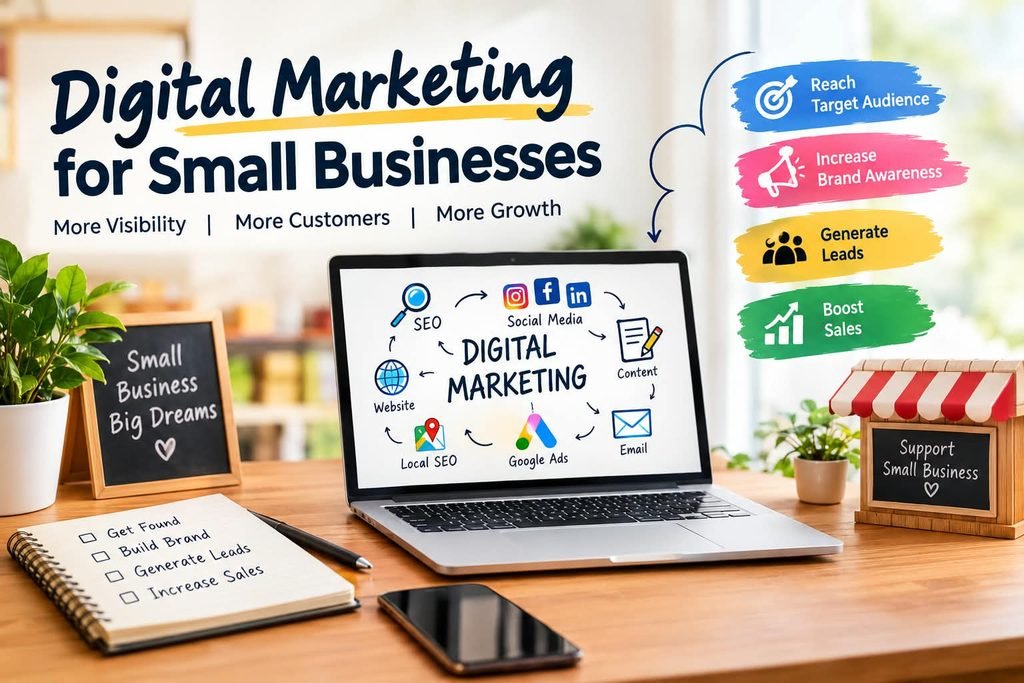
Here are some popular digital marketing strategies used by small businesses:
- Search engine optimization (SEO)
- Social media marketing
- Content marketing
- E-mail marketing
- Google Ads and other paid advertising
- Local SEO
- Influencer marketing
- Website and conversion optimization
Why Is Digital Marketing So Important for Small Businesses?
Sometimes traditional marketing approaches may cost a lot and it is not always easy to measure the outcomes. Digital marketing gives businesses more chances for tracking results and customer behavior analysis.
1. To Get More Potential Clients
With the help of website and social networking sites, a small business can expand its clients not only in local region but also online, and with search engines it will get more chances to be found by potential customers while they look for some specific product/service.
2. Brand Awareness
By providing consistent content online, a small business gets the opportunity to build brand awareness. Answering customers’ questions and maintaining active social networking sites can help to build a strong presence online.
3. Lead Generation
Businesses have more possibilities for attracting interested customers with the help of digital marketing. For example, a website landing page, contact form, social networking campaign or mailing list can transform web site visitors into possible leads.
4. Performance Measurement
One of the biggest advantages of online marketing is the chance to monitor your results. Website traffic, engagement, clicks and conversions give you clear insight about what marketing efforts bring results.
Best Digital Marketing Strategies for Small Business
There is no one-size-fits-all marketing strategy for any business. The best digital marketing strategy varies from one industry to another depending on many factors including target market, location, budget, etc.
Below are some great digital marketing strategies for small businesses.
1. Search Engine Optimization
SEO allows websites to rank high in search engines whenever someone looks for products, services or information that is related to the content of that particular site.
For instance, a local bakery can create content on issues like “best bakery near me,” “custom birthday cakes” or “wedding cakes in [location].”
Some of the things that a basic SEO strategy should encompass include:
- Keyword research
- Content creation
- Page title and header optimization
- Website speed and usability improvement
- Backlink building
- Location-based content creation
- Business information management
The aim should not just be to keyword stuff but rather to create content that provides genuine solutions to customer queries.
2. Social Media Marketing
Social media marketing might assist small businesses to connect with their audience.
Sites such as Instagram, Facebook, LinkedIn, and other social media sites may work well, based on the targeted audience and niche.
The small business might make use of social media to:
- Highlight their products/services
- Provide educational information
- Post testimonials from customers
- Answer questions
- Advertise offers
- Form a community
Redirect their audience to the website
It’s better to be consistent with your content than just post often. It’s essential to make content that is valuable to your specific audience.
3. Content Marketin
Content marketing means generating and distributing helpful content that will attract customers.
Types of content marketing might include:
- Blog posts
- Guides
- Videos
- Infographics
- Case studies
- FAQs
- Social media posts
For instance, a digital marketing agency might have its blog post called “How to Improve Website SEO,” not just advertising its services.
Such helpful content not only establishes credibility but allows you to attract traffic via search engines.
4. Local SEO
When it comes to businesses targeting a particular geographic region, local SEO becomes useful.
Restaurants, salons, clinics, gyms, and other companies delivering local services can enhance their online presence to give people access to such data as location, working hours, services provided, and contact information.
It is crucial to ensure your business listing is accurate and consistent across all the necessary online resources.
Reputation management is also an important component when talking about local marketing because customer reviews may affect people’s perception of your local business.
5. Email Marketing
With email marketing, businesses can directly communicate with those people who have chosen to receive communications from you.
Businesses may use emails to inform customers about the following:
- Product updates
- Educational information
- Offers
- Newsletters
- Events
- Customers’ updates
The best-performing email campaigns typically offer something valuable rather than spamming subscribers with promotions too often.
6. Paid Advertising
Organic marketing takes time to work and paid advertising helps businesses reach targeted audiences faster.
With such platforms as Google Ads and social media advertising platforms, businesses are able to run a campaign according to certain parameters like keywords, interests, demographics, location, etc.
Nevertheless, paid advertising needs a goal.
How to Build a Digital Marketing Strategy
Building a digital marketing strategy doesn’t have to be difficult. Some steps can be taken by small businesses.
Step 1: Determine Your Ideal Target Market
Figure out who your ideal customers are. Think about their needs, interests, problems, geographical location, and behavior.
Step 2: State Your Goals
Decide what you want from your marketing activities.
For instance:
- Attract more website traffic
- Create more leads
- Boost sales
- Build brand awareness
- Acquire more customers locally
Step 3: Choose Appropriate Channels
Not all digital marketing channels have to be used by you. You should only use those which are most popular among your target market.
Step 4: Create Quality Content
Work on creating content which would help customers in solving their issues or answering questions. It can be blog posts, videos, social media updates, guides, etc.
Step 5: Measure Your Results
Check out how well your website traffic, engagement, leads, conversions, and ads perform.
Digital Marketing Mistakes Small Businesses Make and What They Should Avoid
It is quite natural that when entering the world of digital marketing, many companies make a big mistake by trying to tackle all at once. It is easy to make mistakes in terms of inconsistent content and wasting time and efforts.
These are some common mistakes made by businesses in digital marketing:
- Misidentifying the target audience
- Lack of SEO
- Posting without any strategy
- Promotional content only
- No optimization for mobile users
- Lack of customer review
- Advertising without any way to track success
- Expectation of immediate results from any activity
For a successful strategy, there are always required tests, measurements, and improvements.
How Much Does Digital Marketing Cost for a Small Business?
The cost of digital marketing for small businesses largely depends on the company, its goals, and the marketing channels it chooses.
Such activities as making social media content or posting new blog entries may be undertaken rather economically. On the contrary, paid advertising, professional SEO service, website creation, and marketing tools may involve some extra investments.
Instead of thinking about how much to invest in marketing, it is important to look at what you may earn from this or another
Conclusion
Digital marketing for small businesses is an effective way to reach potential, increasing brand awareness, attracting leads, and developing your business online.
It does not matter which channels are available; what really matters is that you need to know your target audience, use proper channels, create high-quality content, and track your progress.
From SEO to social media marketing, from content marketing to email marketing and paid online advertising, all of this and more can be done within your digital marketing strategy for your small business.